

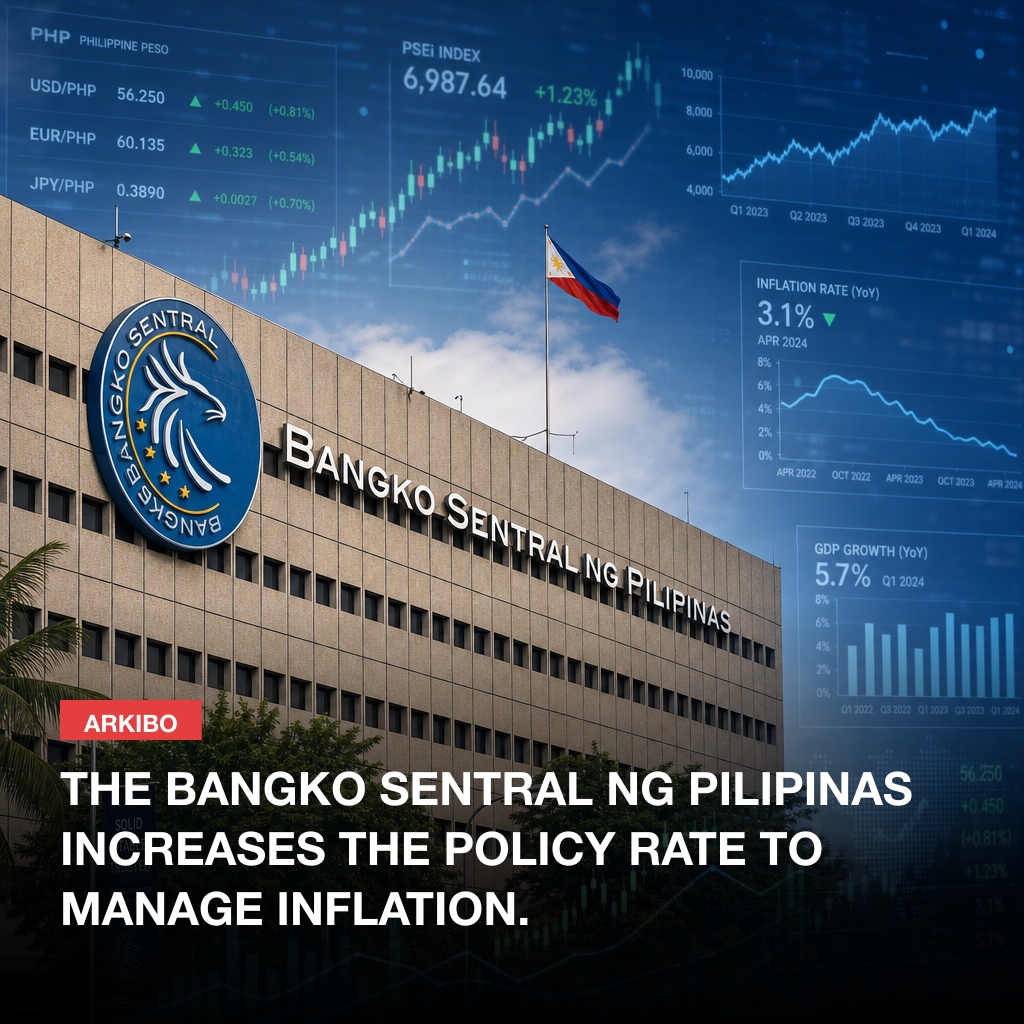
The Bangko Sentral ng Pilipinas (BSP) has increased its policy rate to 4.75%, marking a decisive step in its ongoing effort to control inflation, which has been affecting economic stability in the country. The Monetary Board made this adjustment as a response to inflation rates that have continually exceeded the government's target range. This move is seen as an effort to anchor inflation expectations and provide a signal of the central bank's commitment to price stability.
Governor Felipe Medalla of the BSP stated that this decision is driven by the need to address the mounting inflationary pressures facing the economy. Recent inflation reports have shown persistent upward trends, largely fueled by higher prices in both food and energy sectors. These changes have been affecting consumers nationwide, prompting the central bank to adjust its monetary policy.
The decision to increase the policy rate was not made in isolation but rather as part of a broader strategy to ensure financial stability. By raising the policy rate, the BSP aims to manage inflationary expectations that influence economic activities ranging from spending to investment. This increase might make borrowing more costly, potentially reducing consumer spending and business investments, but is considered necessary to temper inflation.
Experts attribute the rise in inflation to several domestic and international factors. Locally, supply chain disruptions and adverse weather conditions have contributed to rising costs. Globally, geopolitical tensions and supply-side constraints have impacted the prices of oil and essential goods, compounding domestic inflationary pressures.
Economists are monitoring how this rate hike will affect the Philippine economy in the long term. While higher interest rates may curb inflation, they also carry the risk of slowing down economic growth. The balance between sustaining growth and stabilizing prices remains a challenging path for policymakers.
Analysts also mention the implications for the Philippine peso, which could see strengthening against other currencies as higher rates tend to attract foreign investment. However, the overall impact on the financial markets will depend on how businesses and consumers react to these changes and whether inflation shows signs of stabilizing.
This decision by the BSP reinforces its role as a guardian of economic stability, highlighting the challenges policymakers face in an interconnected global economy. Moving forward, the central bank will likely continue to monitor economic indicators closely and adjust policies as needed to maintain a stable economic environment.