

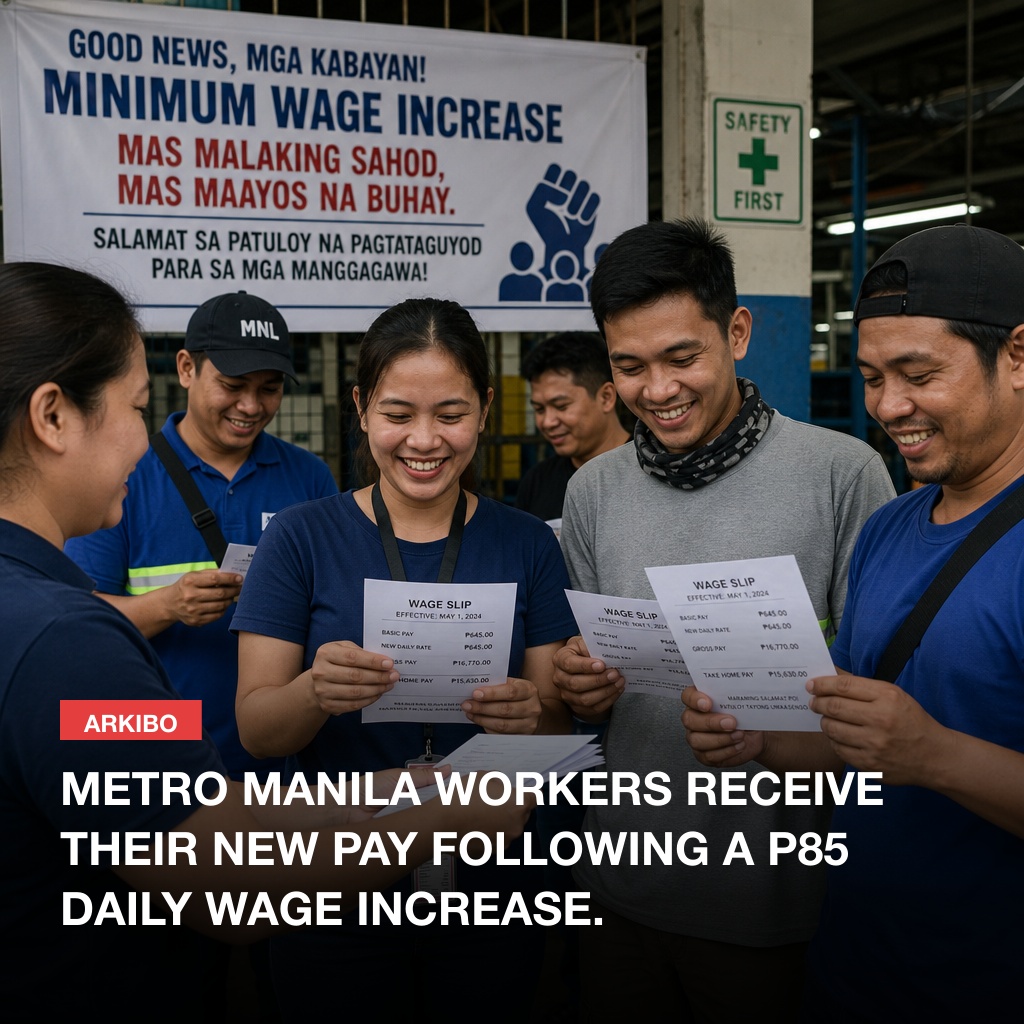
The Regional Tripartite Wages and Productivity Board - National Capital Region announced that the daily minimum wage in Metro Manila has officially increased by P85, boosting the earnings of many workers in the region. This change, effective immediately, comes as a response to ongoing advocacy for higher wages due to the rising costs of living and economic pressures faced by employees.
Prior to this adjustment, the minimum wage in Metro Manila was P570 for non-agricultural workers and P533 for those in the agricultural sector. With the new rate in place, non-agricultural workers will now receive P655 per day, while those in the agriculture sector will receive P618 daily. This adjustment aims to help alleviate financial burdens faced by the labor force while attempting to balance the interests of businesses amidst challenging economic times.
This wage increase is one of the largest in recent years and highlights the ongoing efforts to align wages with current economic conditions. The decision underwent a thorough review process involving consultations with multiple stakeholders including workers’ groups, businesses, and government entities, to ensure that the new wage rate could be feasibly sustained by employers while providing genuine benefits to employees.
The wage hike has sparked varied reactions across different sectors. Labor groups have welcomed the increase as a necessary step towards ensuring a living wage, although some argue that it still falls short of meeting the needs of workers given current inflation rates. Meanwhile, some business owners have expressed concerns over the potential impact on operational costs, particularly for small and medium enterprises which may find it challenging to absorb the additional labor expenses.
Economists studying the wage hike expect it to have mixed impacts on the economy. While it could boost consumer spending power which in turn benefits local businesses, there are potential risks such as increased prices for goods and services which businesses might employ to offset higher labor costs. Monitoring these outcomes will be crucial in determining the long-term effects of the wage adjustment.
The Department of Labor and Employment has reiterated its commitment to closely monitor the implementation of this wage increase to ensure compliance and address any issues that may arise. It also aims to support businesses in adapting to the change through available programs and resources designed to enhance productivity and sustainability.
This development underscores the ongoing discourse on wage adjustments in the Philippines and its role in providing decent living standards for Filipino workers. As living costs continue to rise, further discussions and potential future adjustments might be necessary to ensure that wage policies remain attuned to the changing economic landscape.