

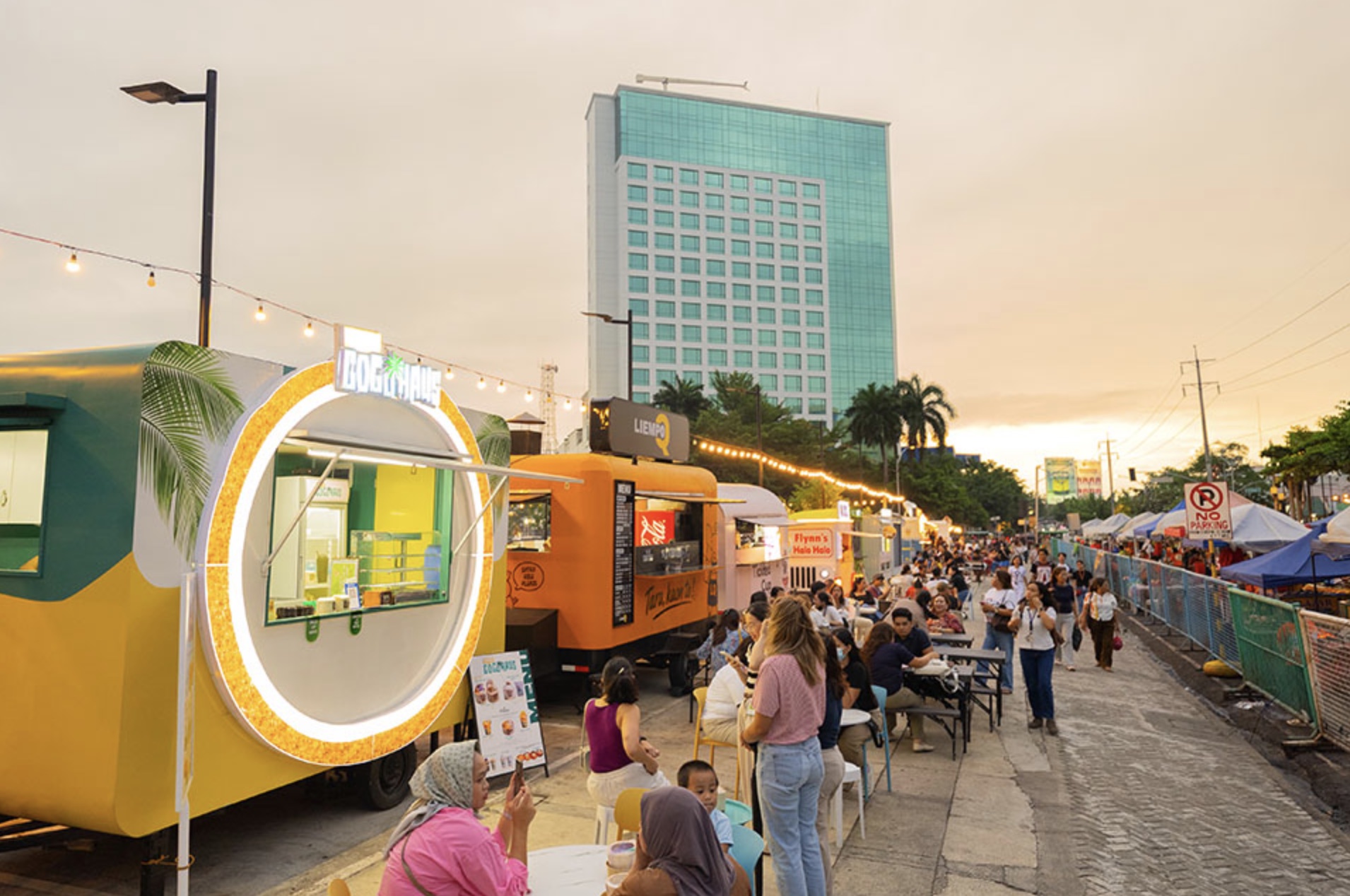
Walk through any bustling city center in the Philippines around dusk, and the rhythm of urban dining makes its presence felt immediately: the sizzle of hot grills, the hum of mobile generators, and lines forming under warm string lights.
Street food has always formed the cultural backbone of Philippine culinary life, but a massive shift is underway. What used to be dominated by pushcarts and temporary canvas tents is rapidly transforming into sleek, professional culinary pods. Across key metros, from metro outskirts to lifestyle hubs in Visayas and Mindanao, entrepreneurs are bypassing traditional brick-and-mortar leases to launch fully equipped mobile restaurants.
The food trailer revolution has officially arrived, reshaping how Filipino food entrepreneurs build, test, and scale their brands.
The Power of Mobility: Autonomy Over High Rent
For decades, opening a restaurant in the Philippines meant confronting significant financial hurdles: long-term commercial leases, steep security deposits, mall developer revenue cuts, and hundreds of thousands of pesos spent on fixed renovations that could never be recovered.
A commercial food trailer upends this dynamic entirely:
- Asset Ownership: Capital goes directly into an operational, titled asset rather than non-recoverable interior fit-outs on rented real estate.
- Geographic Flexibility: If a neighborhood loses foot traffic, a trailer moves. When festivals, outdoor weekend markets, or pop-up hubs open, the business goes directly to where paying customers gather.
- Controlled Overhead: Operating with reduced floor staff, minimized utility footprints, and zero commercial property association dues, profit margins remain resilient even during slow seasons.
This level of independence has made mobile food concepts the platform of choice for emerging chefs, second-career dreamers, and established concepts testing regional expansion without seven-figure overhead.
Booming in the South: The Roxas Movement in Davao
Few places illustrate this evolution better than Davao City. Known nationwide for its vibrant night markets, Davao has taken the outdoor dining concept a step further with dedicated lifestyle setups like the open-air culinary park along the Roxas corridor.
Here, dining is a curated experience. Rows of customized mobile kitchens serve everything from artisanal espresso and refreshers to slow-roasted meats, offering a clean, modern street-side cafe culture.
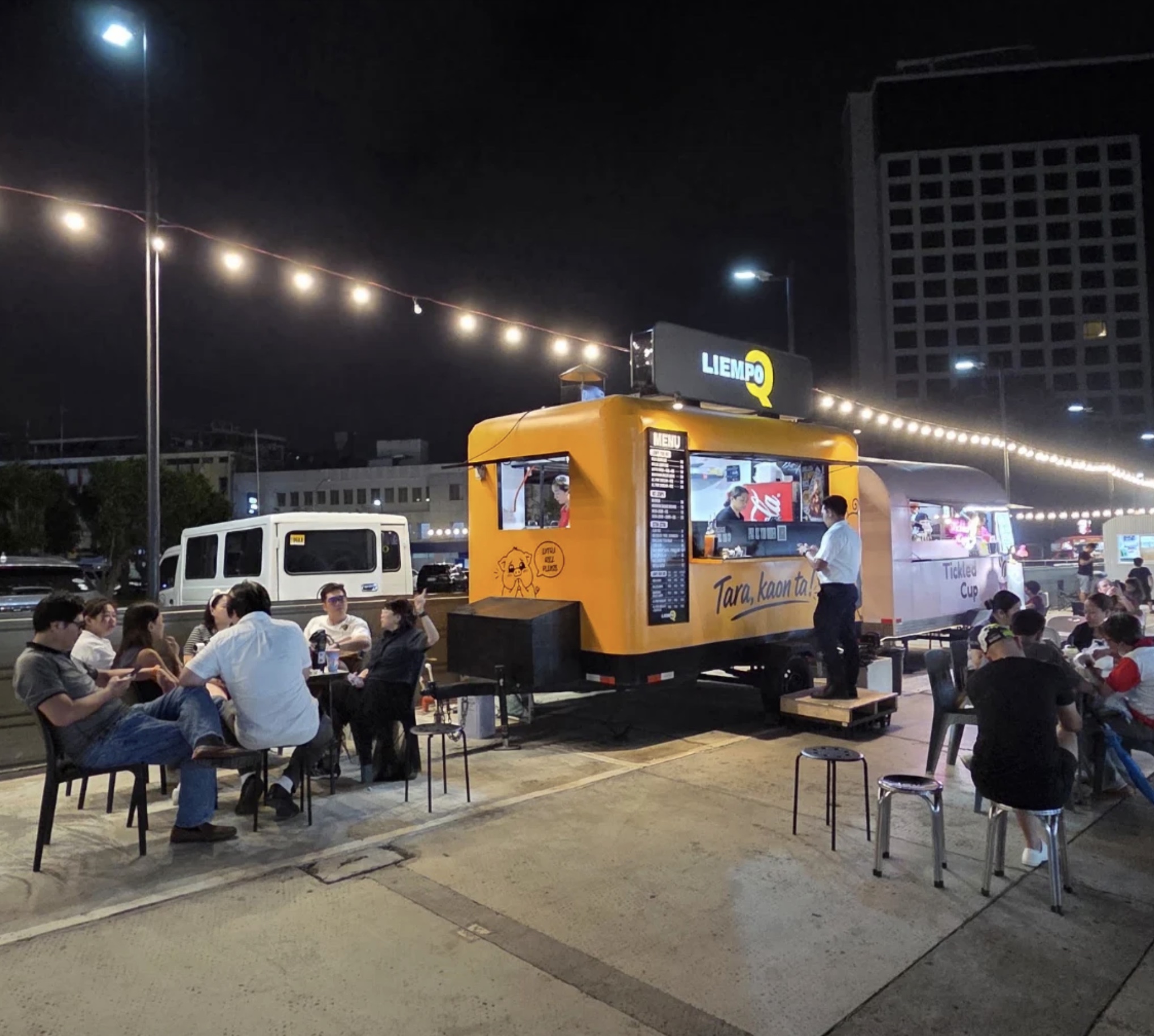
A closer look at customer favorites, such as the smoke-glazed grill powerhouse LiempoQ and the dessert-and-beverage crowd-puller Tickled Cup, reveals why this format succeeds. These are not makeshift food carts. They operate as compact, high-efficiency commercial kitchens featuring custom extraction systems, food-grade stainless surfaces, dedicated plumbing, and unified branding that commands attention from across the street.
The Craft Behind the Counters
This shift in standard reflects a broader maturation in the Philippine mobile culinary sector. Food safety, durability under tropical downpours, and structural roadworthiness require heavy-duty engineering rather than roadside body-shop conversions.
Much of the equipment powering high-volume parks like Roxas comes from specialized domestic fabricators. Several standout builds at the Roxas strip, including units commissioned for LiempoQ and Tickled Cup, were engineered by Bigfoot Trailers PH. By introducing heavy-gauge steel framing, insulated wall panels, and compliant electrical-water routing built to international road-towing standards, premium manufacturers like Bigfoot have given local vendors the structural foundation needed to operate seven days a week in high-heat commercial conditions.
When equipment is purpose-built, operators spend less time troubleshooting breakdowns and more time serving food, allowing local brands to rival mall-grade kitchen outputs on a fraction of the footprint.
The Resale Equation: Trailers vs. Multicabs and Bongos
Beyond everyday operations, the financial calculus of mobile dining often hinges on an overlooked factor: asset depreciation.
For years, the default budget route for Filipino vendors was converting a second-hand Suzuki Multicab, Kia Bongo, or Hyundai Porter into an all-in-one food truck. On paper, it sounds cost-effective. In practice, it creates an economic trap. When you weld cooking stations, water tanks, and heavy exhaust hoods onto an aging engine and chassis, the vehicle suffers immense mechanical wear.
More critically, secondary market resale value plummets. When an owner decides to upgrade or exit, a heavily customized Bongo or Multicab rarely fetches a premium for the kitchen inside. Prospective vehicle buyers see a burdened utility truck with altered bodywork, pricing it no higher than a standard, unmodified cab, essentially wiping out the hundreds of thousands invested in the custom fabrication.
A standalone food trailer completely decouples the kitchen from the powertrain:
- Engine-Free Longevity: Without an engine, transmission, or radiator to maintain, a trailer incurs virtually zero mechanical breakdown risks and does not degrade mechanically while parked.
- Preserved Vehicle Equity: The tow vehicle (whether a daily-driver pickup, SUV, or utility truck) remains completely stock and retains its independent market value.
- Two Liquid Assets: The owner holds two distinct assets that can be sold separately. The kitchen maintains full value in the commercial food market, while the vehicle can be resold or retained for personal use at standard vehicle rates.
- Inflation Proofing: Because a mobile kitchen is a tangible asset, it holds value over time and can be sold for close to its original price or even more in the future, making it a hedge against inflation. As the cost of goods and services increases, so does the value of the assets used to produce them. In contrast, a converted vehicle is subject to the depreciation of the underlying chassis and engine, which diminishes the value of the entire asset over time.
Regulation as a Catalyst for Growth
The shift toward commercial trailers also coincides with a nationwide push toward structured public health governance. As local government units (LGUs) and city health offices raise standards, the era of improvised roadside stalls using non-food-grade plywood, open drainage, and exposed gas lines is steadily being phased out in favor of formalized vending zones.
Rather than stifling the market, tighter health, sanitation, and road safety regulations are legitimizing it. Standardized electrical hookups, integrated grease management, and proper food-grade stainless prep areas give local authorities the confidence to designate prime urban spaces for mobile vendors.
As the Philippines embraces organized food parks, night markets, and outdoor lifestyle districts, mobile food trailers are moving from the fringes into the mainstream. For Filipino culinary entrepreneurs, owning a dedicated restaurant on wheels is no longer just a budget workaround: it is an enduring, commercially viable enterprise built for the future of Philippine dining.