

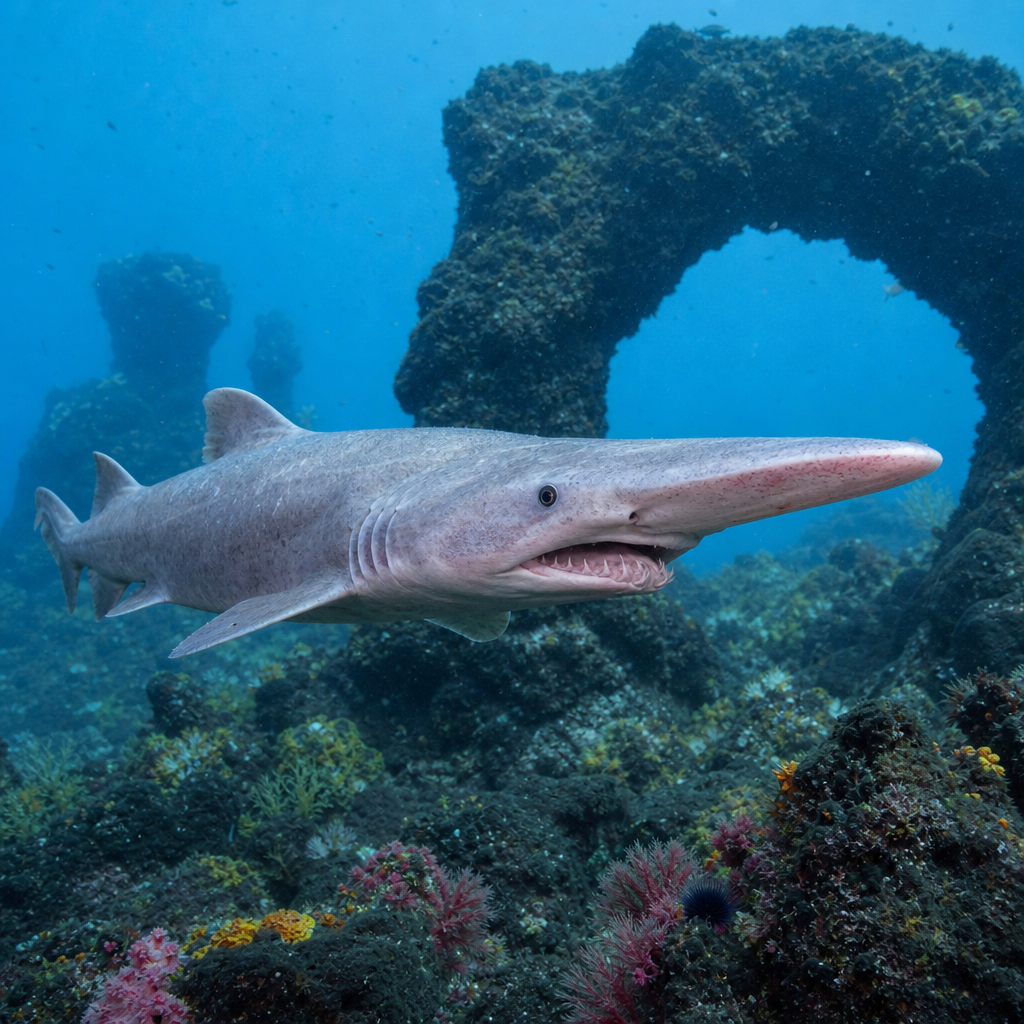
A scientific milestone has been reached with the successful filming of a live goblin shark in its natural habitat, a feat accomplished deep underwater surrounding ancient volcanic archipelagos. This unprecedented achievement offers an extraordinary glimpse into the previously elusive life of one of the ocean's most mysterious creatures. This remarkable footage has the potential to drive new conversations about marine biodiversity, especially in the context of conservation efforts within the Philippines' extensive and diverse ocean habitats.
Goblin sharks, known for their distinctive elongated snouts and deep-sea dwelling nature, are a rare sight for scientists and marine enthusiasts. Capturing live, moving images of this species has been a long-standing goal for researchers aiming to understand more about how these creatures live and thrive. The recent footage provides vital information that could illuminate various aspects of their behavior, adaptation mechanisms, and ecological role in the under-explored deep-sea environment.
The ancient volcanic archipelagos, where the goblin shark was documented, serve as an important marine habitat rich in biodiversity. These underwater formations create unique ecosystems, often hosting a plethora of species that have yet to be fully studied. The presence of goblin sharks in these regions underscores the need for further exploration and preservation of such critical habitats.
Marine conservationists are hopeful that this newfound understanding will bolster efforts to protect these marine ecosystems. The Philippines, known for its rich oceanic life, stands to benefit from global and local initiatives that prioritize aquatic biodiversity. Enhanced conservation strategies could safeguard these habitats against threats such as overfishing, climate change, and pollution.
The discovery has sparked interest in deepening exploration endeavors into less frequented parts of the ocean, where knowledge is limited but crucial for comprehensive environmental stewardship. Researchers believe that continued study of the goblin shark and similar species will contribute significantly to the broader understanding of ocean life and biodiversity conservation.
Overall, this significant breakthrough in marine biology not only offers insight into the enigmatic goblin shark but also serves as a catalyst for conservation awareness and action. This pioneering footage may indeed serve as pivotal visual evidence urging scientists, policymakers, and the public to prioritize the fragile ecosystems that lie beneath the ocean's surface.