

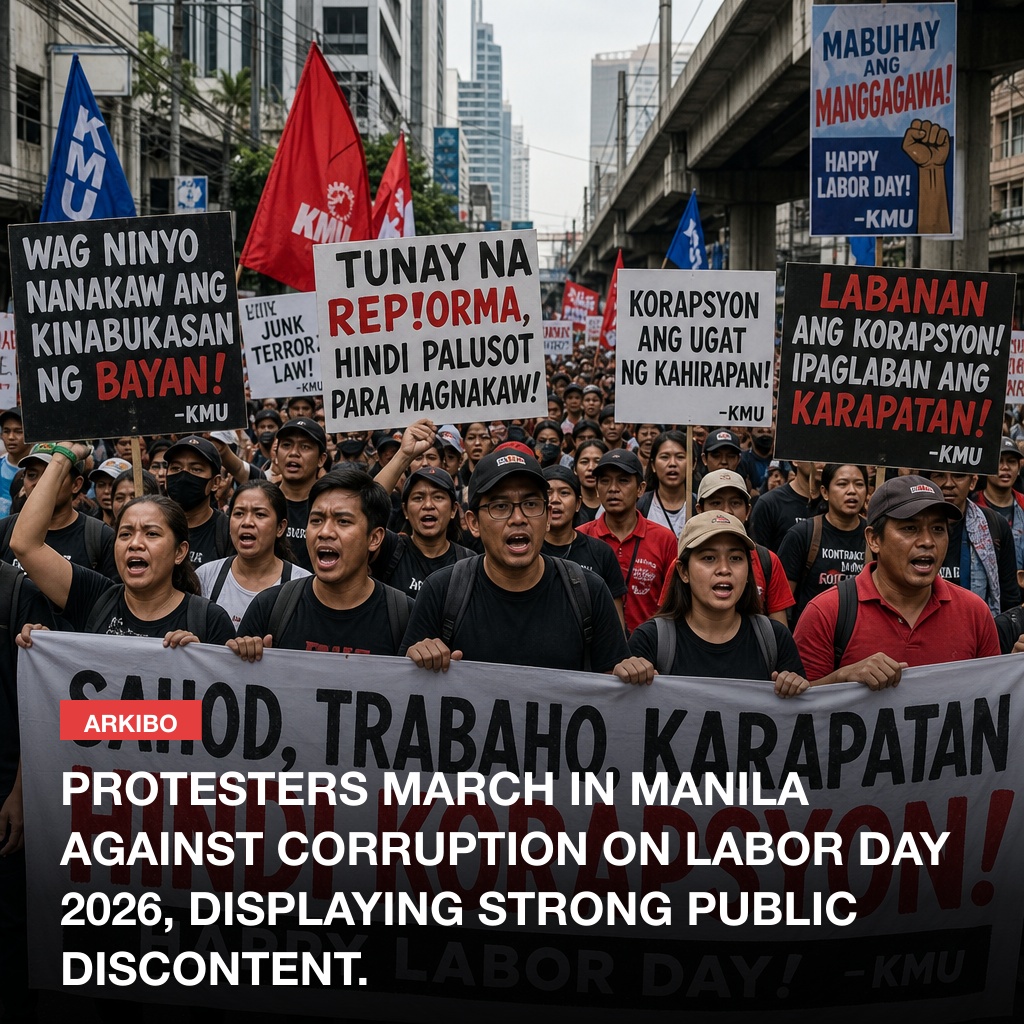
On May 1, 2026, the Philippines witnessed a massive outpouring of public dissent as citizens from various sectors took to the streets nationwide in a series of coordinated marches against corruption. Scheduled on Labor Day, a day already symbolic of the struggle for workers' rights, the demonstrations sought to highlight corruption's detrimental effects on labor conditions and public welfare.
From Manila to Davao, protesters carried placards and banners denouncing various forms of corruption that affect everyday life. Many participants voiced frustrations over alleged misuse of public funds and lack of transparency in government. Labor unions, civic groups, and student organizations formed a broad coalition, reflecting a unified call for accountability from public officials. They demanded sweeping reforms that would ensure transparency, fair justice, and the elimination of graft.
In the capital city, Manila, a significant gathering took place at the Luneta Park. The area has historically been a focal point for mass protests, and it once again served as a crucial platform for citizens to express their grievances. Similar scenes were reported in Cebu City and in the southern region of the Mindanao, where crowds echoed the call for change and governance reforms.
The government responded by deploying security forces to monitor the protests and ensure public safety. Officials reiterated their commitment to addressing corruption and enhancing government transparency. Authorities stressed the importance of maintaining peace during the demonstrations, emphasizing the people's right to peaceful assembly.
As the protests gained momentum, social media played a crucial role in mobilizing support and amplifying the movement's messages. Platforms became inundated with images, live streams, and posts from participants across the nation, further galvanizing public engagement and spreading awareness of the issues at stake.
Local media coverage of the events highlighted both the widespread nature of the protests and the government’s response. Analysts noted that while the immediate outcomes of the demonstrations remained uncertain, the symbolic power of such nationwide participation underscored the pressing need for addressing the root causes of corruption in the Philippines.
The Labor Day anti-corruption protests underscore an ongoing public dissatisfaction with current systems and herald a strong call for political reform. As the nation reflects on the events of the day, the future trajectory of government policies and public accountability remains a central focus for citizens and policymakers alike.